By Ines Reinhardt on August 5, 2026
Many coworking operators communicate sustainability through plants in the entrance area, reusable cups, or green electricity certificates. That's visible and meaningful, but rarely what actually reduces costs. For operators, the bigger lever usually lies in a less visible place: day-to-day operations.
Because a space doesn't only consume energy when the lights are on. It consumes resources when meeting rooms are empty but air-conditioned. When tablets and displays run continuously. When print jobs are never picked up. When devices get replaced even though they could have been reconfigured remotely. When a technician has to travel out for a problem that could have been solved centrally.
This is exactly where Green Ops begins: sustainability as an operating model, not as a communication motive.
Green Operations Instead of a Green Facade
The difference between Green Marketing and Green Ops is simple: marketing shows that you care. Ops ensures that less is consumed. That can be expressed in euros, kilowatt-hours, and avoided on-site visits.
Coworking spaces face particular challenges: occupancy fluctuates by weekday, time of day, location, and member structure. At the same time, members expect everything to work at all times: Wi-Fi, printers, displays, booking systems, access, meeting rooms, community areas.
This quickly leads to expensive and unsustainable patterns: infrastructure is designed for maximum availability but not controlled dynamically enough.
Operators face the question: where does unnecessary resource consumption arise in daily operations. For example with paper, devices, IT support, and how can it be technically reduced without members losing any comfort?
Four Operational Levers with Direct Impact
1. Energy consumption: Not everything needs to run all the time
Many spaces are technically in permanent standby mode. Screens display information even when no one is in the room. Room-booking tablets remain active even though the location is closed. Lighting, climate control, and peripheral devices are sometimes geared more toward opening hours than actual usage.
For operators, it's worth taking a close look at three questions:
- Which devices run outside of actual usage hours?
- Which areas are climate-controlled or lit even though they're rarely used?
- Which systems can be controlled based on time or occupancy?
It gets particularly interesting when room data, booking systems, and device management work together. A meeting room that isn't booked for four hours doesn't need a full display, climate, and device configuration. A location that's barely used from 3 p.m. on Fridays can be operated differently than on a Tuesday morning.
The operational advantage: every automated shutdown not only saves energy but also reduces wear and tear.
2. Using devices longer: The most sustainable purchase is often the one avoided
Coworking spaces today use an entire fleet of digital devices: tablets for check-in and room booking, smartphones for the team, displays in meeting rooms, scanners, and printers. Many of these devices aren't replaced because they're physically broken, but because they're hard to manage, no longer cleanly configured, or not uniformly secured.
This is an underestimated sustainability lever.
When devices are managed centrally, many problems can be solved without swapping out hardware:
- Update configurations remotely
- Roll out operating system updates on a schedule
- Install or remove apps centrally
- Reset devices in case of misconfiguration
- Apply security policies uniformly
For operators, this means less e-waste, less replacement procurement, and less manual work per location. This is especially crucial for growing space networks, since every additional location increases complexity.
3. Printing: Small default changes, big impact
Printing is not the biggest sustainability lever in coworking, but it is one of the most easily measurable. And that's exactly why it's a good entry point into Green Ops.
In many spaces, unnecessary costs arise from three simple patterns:
- Print jobs are sent but never picked up
- Color printing is more readily available than necessary
- Single-sided printing is the default setting
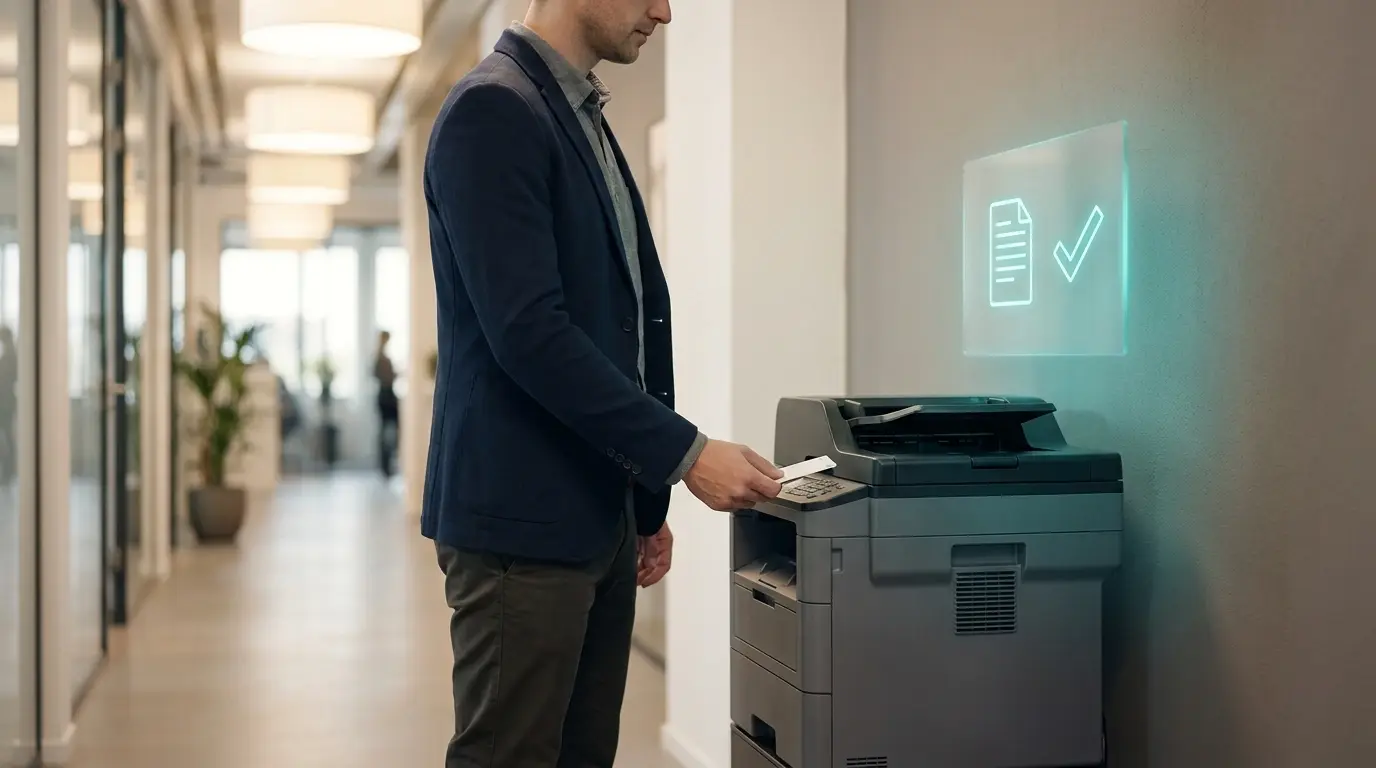
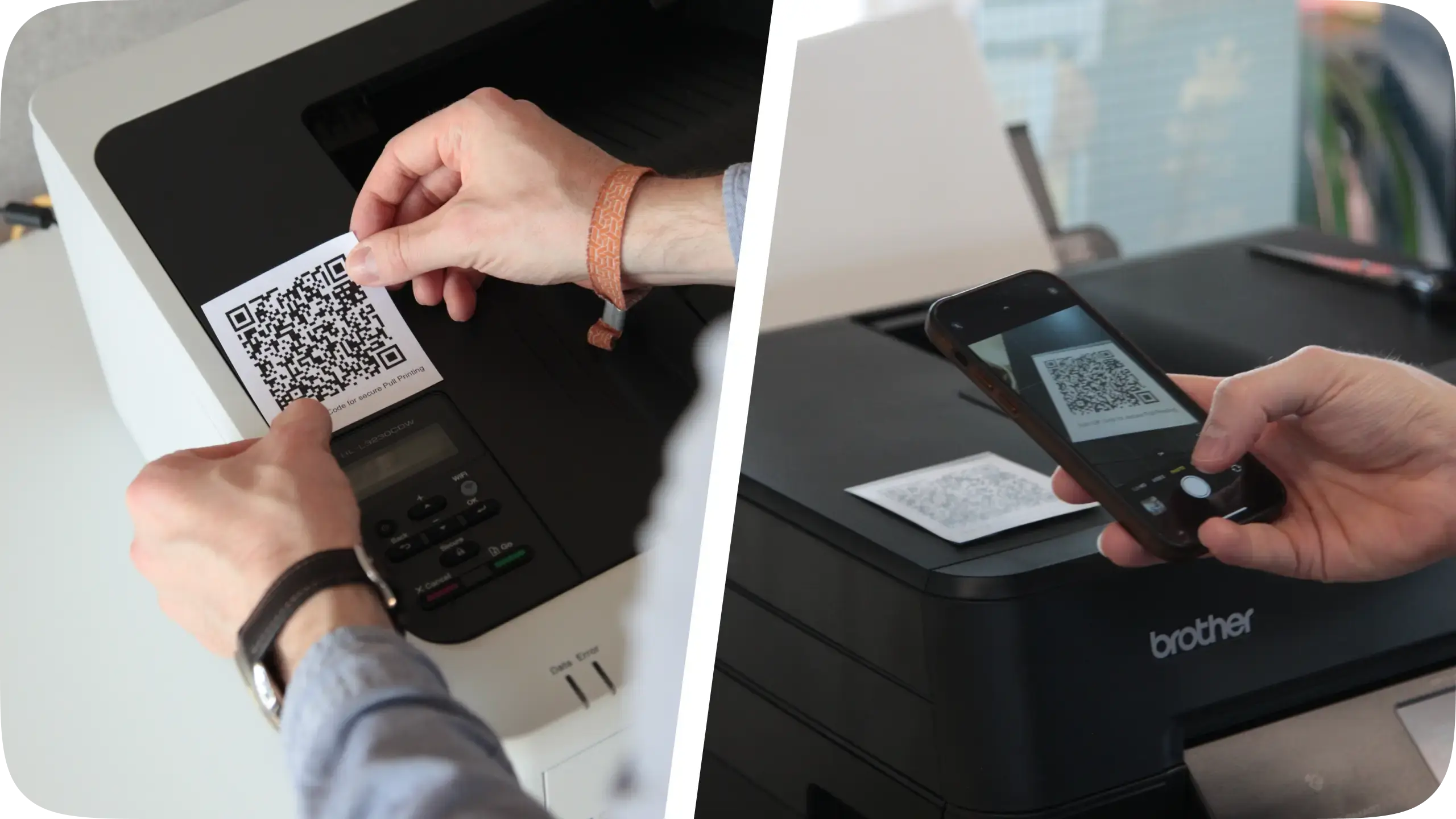
Cloud-based print management can correct these patterns without patronizing members. Pull printing ensures a job is only printed once the person is standing at the device and releases it. Default rules like duplex and black-and-white printing reduce consumption without completely banning access to color or single-sided printing.
The crucial point is not "please print less." The crucial point is: the infrastructure makes the more resource-friendly option the default.
4. Less on-site support: Sustainability also lies in avoided tripsAn IT ticket seems small: a printer won't connect. A check-in device needs an update. A team member can't log in. But when service providers or internal IT staff have to travel out regularly for such issues, costs, time losses, and emissions add up.
For a single space, this may seem manageable. For operators with multiple locations, it's a real factor.
Green Ops therefore asks: which problems really need to be solved on-site, and which only because the infrastructure isn't remote-capable?
Remote management of printers and mobile devices reduces:
- Trips between locations
- Downtime in member services
- Ad-hoc call-outs outside planned maintenance windows
- Dependence on individual people on-site
This not only improves the sustainability balance sheet. It also makes operations more predictable.
Reporting: Measuring Instead of Claiming
More and more corporate members and landlords are asking for solid ESG metrics as part of tenders or certifications. Whoever can deliver data on energy consumption, device lifecycles, or on-site visits has a real advantage.
Reporting features in print and device management deliver exactly that: page volume per location, share of color printing, avoided on-site visits, device usage lifespan. All of this is usable for sustainability reports, landlord conversations, and equally for budget planning and location comparisons.
What Pays Off
Sustainability pays off for coworking operators especially when it reduces operational friction. The best measures are therefore not necessarily the most visible ones, but those that permanently remove effort from the system.
Green Ops can reduce costs through:
- Less energy consumption during idle time
- Lower paper and toner consumption
- Longer lifespan of existing devices
- Less local server and maintenance infrastructure
- Less on-site support
- Better predictability across multiple locations
This is what makes Green Ops so attractive: the measures don't have to be justified through a sustainability budget alone. They simultaneously pay off in operating costs, scalability, and service quality.
Conclusion
Green Marketing is quickly sold, but rarely verifiable. Green Ops is less visible, but it's the part that actually reduces costs and can be proven with real numbers. For coworking operators, this means: instead of crafting another message, it's worth looking at the infrastructure that runs every day. It's the printers, tablets, and terminals, which hold untapped potential at almost every location.
ezeep supports this approach in the field of print management: cloud-based, cross-location, and without local print servers. Operators can define print rules centrally, use pull printing, and analyze consumption data. In addition, ezeep offsets the CO2 emissions of every printed page by supporting Justdiggit's regreening projects.

Optimize ESG Reporting for Your Print Infrastructure with ezeep
Secure Pull Printing for Your Environment