How Pacific Workplaces Creates a Space for Focused Work with 'We Care'
By Ines Reinhardt on November 3, 2026
San Francisco Financial District · 15 locations · 23 years of experience · Coworking that focuses on work
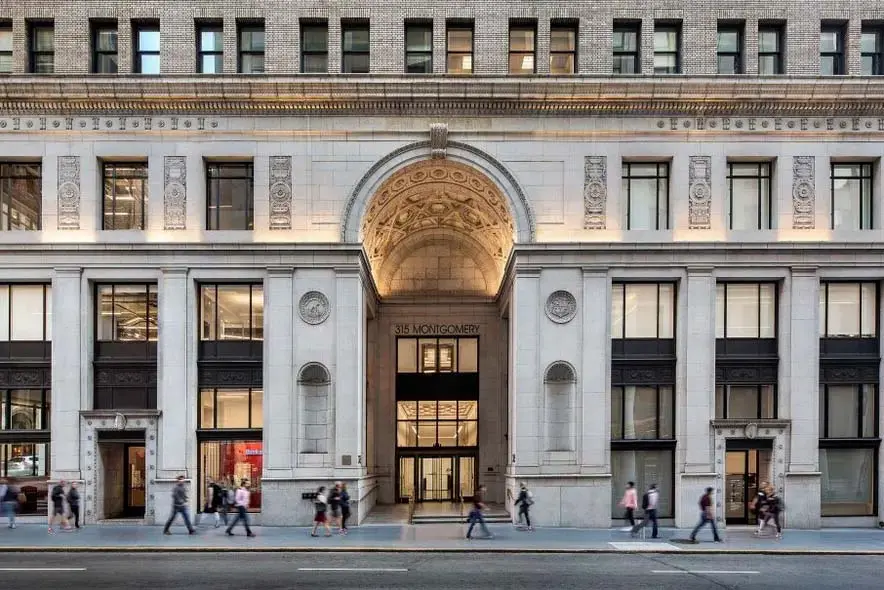
In the heart of San Francisco's Financial District, at 315 Montgomery Street, Pacific Workplaces recently opened its newest location. But for the team, the focus isn't on the number of locations. It comes down to a simpler question: How does work actually feel in a given space?
For over 20 years, Pacific Workplaces has pursued an approach that deliberately goes against the trend: a clear focus on what members really need. Quiet, reliability, and a team that genuinely cares, instead of ping-pong tables, karaoke rooms, or loud shared booths.
We spoke with the Pacific Workplaces team about their new Financial District location, why less distraction is often better than amenities, how outstanding staff drive an average membership length of 56 months, and what carried them through the pandemic.
A Space that Opts Out of the Amenities Arms Race
Many coworking spaces today rely on the same concept:
"Walk through a lot of coworking spaces today and you'll see the same playbook: ping-pong tables, communal speakers, karaoke rooms, maybe a foosball table in the corner. It photographs well. It's great for the tour. It isn't great for getting your work done," explains David from Pacific Workplaces.
Ask coworking members what bothers them most, and the answer is rarely a lack of amenities. It's noise and distraction, often caused by too many amenities of the wrong kind.
The new location on Montgomery Street sits right in the Financial District, surrounded by people who need focus the most: attorneys ahead of a filing, analysts just before market close, founders between two investor meetings.
"That's not an environment for a karaoke room down the hall. So we didn't build one. It's just a quiet, well-designed place to sit down and work, which is what most of our members, and our neighbors on Montgomery Street, actually came for," says David.
That's precisely the difference: instead of betting on spectacular amenities, Pacific Workplaces stays consistently focused on what actually matters for concentrated work.
A Community that Grows Together Over Years
Pacific Workplaces serves members from very different walks of life: "[...] attorneys near the courthouse in Oakland, startup founders in Cupertino who needed a real address instead of a garage, and consultants in San Mateo who got sick of working at the coffee shop. All of our communities are unique, so of course we’re fans of all of them. We have some locations where members have been together long enough they know each other's kids' names, not just job titles," says David.
These long-standing relationships noticeably change how the space feels.
"There's a shift that happens when people share a space for years instead of months. It stops feeling like "coworking" and starts just feeling like work, surrounded by people who actually ask how your week's going."
Why Members Keep Coming Back
When asked what members value most, Pacific Workplaces has a clear answer:
"Our staff, hands down. Every time we ask members why they stay, it circles back to a person, not a feature. We've got community managers who've been with us over a decade. Alim in San Francisco has been with us for 6 years, and our team in Cupertino, Beth and Sofia, who have both been with us for over 9 years, are great examples," says David.
The result: members stay longer.
"Our members average 56 months with us, which means people aren't just passing through, they're actually building something here. And I think that's the domino effect of good staff. When the same person greets you every morning and remembers your name, remembers what you're working on, that's not a perk, that's the whole reason people don't leave," David explains.
The Operator's Perspective: Getting through the Pandemic with Persistence, not a Pivot
No coworking operator can avoid this question: how did you get through the pandemic?
"Some of our locations are still recuperating from Covid, but thank goodness things are looking up. What got us through wasn't some clever pivot, it was mostly just being stubborn about relationships. We didn't treat members like accounts to retain, we treated them like people going through something hard, same as us," David recalls.
The team also stays true to its approach when it comes to amenities, rather than chasing the amenities arms race.
"It's tempting to chase the amenities arms race like kombucha taps and fancy espresso machines. We'd rather spend that money making sure there are enough conference rooms available for members when they need it."
How ezeep Simplifies Everyday Work at Pacific Workplaces
In a coworking space where dozens of different companies work daily with their own laptops, even something seemingly mundane like printing can become a real headache.
"Printing sounds like a boring thing to care about until you're the one untangling a jammed printer for six different companies who each brought their own laptop. That headache pretty much disappeared with ezeep.", says David.
He adds: "People need to be able to print from anywhere, and our management team needs to be able to easily track the printing services used."
That's exactly where the real value of ezeep lies for Pacific Workplaces:
"That's the thing about coworking that people underestimate: a hundred tiny frictions add up, and taking even one off the table means a smoother day for everyone."
Concretely, this means:
- Printing possible from anywhere in the space
- Printer conflicts between different companies resolve automatically
- Clear tracking of print services used, for management
- One less friction point in everyday life, for members and team alike
Pacific Workplaces' Top Tip for New Coworking Operators
Asked for the most important advice for anyone opening a coworking space right now, David answers unambiguously:
"Don't build it for the person you imagine wants a coworking space. Build it for the person who's actually walking through your door on a Tuesday morning, stressed about a call in twenty minutes. We didn't get to 23 years chasing design trends. We got here by being there when someone had a problem and actually caring about the answer."
And here too, David comes back to the decisive factor: people.
"Of course hiring and retaining a stellar team is key too. For us, “We Care" isn't a marketing word. It's in everything we do."
Why Pacific Workplaces is our Space of the Month
Pacific Workplaces shows that coworking doesn't need to get louder, more colorful, or more event-packed to succeed. Sometimes the strongest differentiator is simply quiet, combined with a team that truly knows its members.
From the new location in San Francisco's Financial District to the network of 15 locations across California and Nevada, Pacific Workplaces builds spaces centered on focus, reliability, and personal care.
Visit Pacific Workplaces
Pacific Workplaces offers professional office space, coworking, and virtual offices across 15 locations in California and Nevada, from the new location in the San Francisco Financial District to long-established communities in Oakland, Cupertino, and San Mateo.
Curious? 👉 pacificworkplaces.com
Pacific Workplaces is part of the ezeep Space of the Month series, where we feature coworking operators who create more than just workspaces.
Frequently Asked Questions
Does a coworking space need lots of amenities to succeed?
No. Successful coworking spaces don't necessarily win with ping-pong tables, kombucha taps, or karaoke rooms. Instead, what matters is quiet, reliable infrastructure, and a team that genuinely cares about its members.
What is the most common complaint in coworking spaces?
Surveys among coworking members consistently show that noise and distraction are the most common complaint. Not a lack of amenities, but too many of the wrong kind. Especially for focused work, quiet, well-designed environments are needed instead of loud shared areas.
How long do members typically stay in a coworking space on average?
Average membership length varies significantly by provider, often ranging from a few months to several years. Long tenure is usually driven by personal care, a reliable team, and a genuine sense of community that goes beyond simple desk usage.
How does printing work in a coworking space with multiple companies?
In coworking spaces, multiple companies often use the same infrastructure with their own laptops, which quickly turns printing into a source of errors. Solutions like ezeep enable printing from anywhere in the space, prevent printer conflicts between users, and give operators clear tracking of the print services being used.
- October 2026 (8)
- September 2026 (14)
- August 2026 (11)
- July 2026 (9)
- June 2026 (12)
- May 2026 (3)
- April 2026 (3)
- March 2026 (3)
- February 2026 (2)
- January 2026 (2)
- December 2025 (1)
- November 2025 (4)
- October 2025 (4)
- September 2025 (1)
- August 2025 (4)
- July 2025 (1)
- June 2025 (3)
- May 2025 (3)
- April 2025 (5)
- March 2025 (6)
- February 2025 (5)
- January 2025 (3)
- December 2024 (5)
- November 2024 (5)
- October 2024 (6)
- September 2024 (2)
- August 2024 (2)
- July 2024 (4)
- May 2024 (4)
- March 2024 (1)
- February 2024 (3)
- January 2024 (1)
- December 2023 (1)
- November 2023 (2)
- October 2023 (3)
- September 2023 (2)
- August 2023 (1)
- July 2023 (2)
- June 2023 (2)
- May 2023 (1)
- April 2023 (3)
- March 2023 (5)
- February 2023 (4)
- January 2023 (2)
- December 2022 (3)
- November 2022 (1)
- October 2022 (5)
- September 2022 (4)
- August 2022 (1)
- July 2022 (3)
- June 2022 (4)
- May 2022 (2)
- April 2022 (4)
- March 2022 (4)
- February 2022 (2)
- January 2022 (1)
- October 2021 (1)
- July 2021 (5)
- June 2021 (4)
- May 2021 (3)
- April 2021 (1)
- March 2021 (4)
- February 2021 (1)
- December 2020 (1)
- November 2020 (1)
- October 2020 (1)
- September 2020 (1)
- July 2020 (1)
- June 2020 (1)
- April 2020 (4)
- March 2020 (3)
- February 2020 (3)
- January 2020 (1)
- August 2019 (2)
- May 2019 (1)
- January 2018 (1)
You May Also Like
These Related Stories

How Culture Co-Working Built a Community People Actually Want to Come Back To

Printing in the Coworking Space: How It Works for Every Device