By Ines Reinhardt on August 4, 2026
Coworking spaces have a distinctive energy profile: long operating hours, many devices in standby mode, shared infrastructure like printers, lighting in common areas, and often air conditioning designed for continuous operation. These very factors, however, offer the greatest savings potential, because they can be centrally controlled, unlike in classic offices with fixed employees.
We've compiled the most effective levers that are especially suited to coworking spaces, along with measures that often pay for themselves within just a few months.
1. Energy Audit: Measure First, Then Optimize
Before planning major investments, it's worth taking a simple look at the biggest consumers. An energy audit doesn't have to be complicated. Even a structured inventory often reveals where unnecessary costs arise.
Helpful questions include:
- Which devices run outside of opening hours?
- Which rooms are heated or cooled even though they're empty?
- Are there multiple printers that are barely used?
- Which areas are permanently lit?
- When do peak loads occur throughout the day?
Smart plug-in meters, consumption meters, or data from building automation systems are often enough to get started. What matters is not perfection, but transparency. Many quick savings only become visible once it's clear what's actually consuming energy.
Typical payback: Particularly fast, since measuring devices are inexpensive and concrete measures can be derived immediately.
2. Lighting: Less Constant Light, More Intelligent Control
Lighting is one of the simplest levers in the space. The switch to LED has already happened in many buildings, but the real potential often lies in the controls.
Especially effective:
- Motion sensors for hallways, restrooms, storage areas, and phone booths
- Presence sensors for meeting rooms and focus areas
- Daylight-dependent dimming in areas with large window surfaces
- Clear lighting zones instead of a single central switch
The advantage for operators: these measures are visibly sustainable but barely restrictive for members. On the contrary. Good lighting control feels more modern and professional.
Typical payback: Often within 6 to 18 months, depending on the starting situation and usage duration.
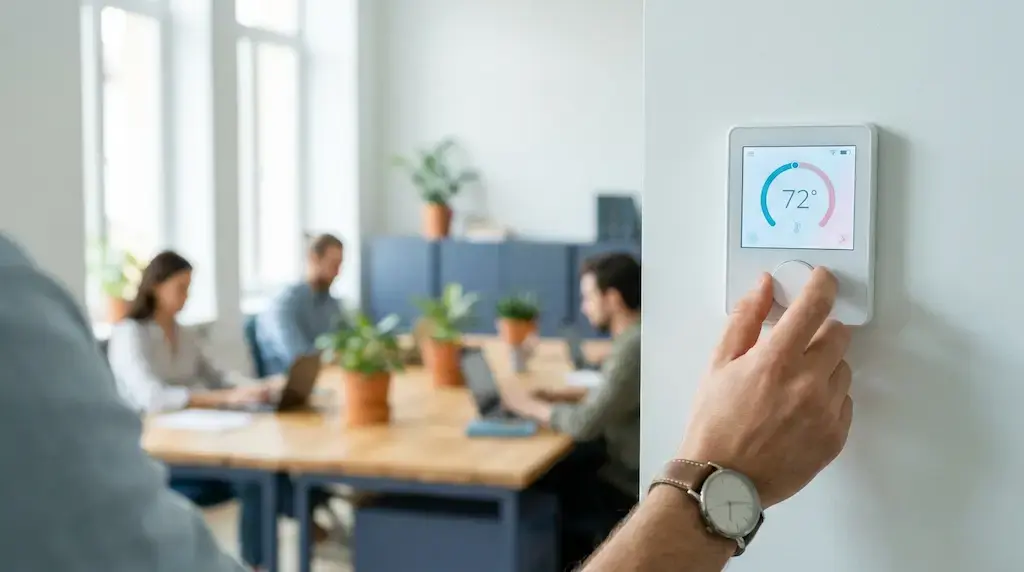
3. Heating and Cooling: Not Every Room Needs the Same Temperature
Heating, ventilation, and air conditioning are among the biggest cost blocks in many spaces. The problem: for comfort reasons, the entire building is often kept at a uniform temperature, regardless of whether individual rooms are actually in use.
A zoned control approach is better:
- Adjust meeting room temperatures only after booking
- Lower temperatures in secondary areas outside peak hours
- Define temperature ranges instead of manual readjustment
- Use sensors for air quality and occupancy
- Regularly maintain air conditioning units and clean filters
Even small adjustments have a big effect. A one-degree temperature reduction can noticeably save energy without impacting comfort.
Important for member experience: Communicate the measure positively. Not "We're cutting back on heating," but "We control rooms based on demand for greater efficiency and comfort."
Typical payback: Smart thermostats and simple controls often pay off within 12 to 24 months.
4. Eliminating Standby Costs: The Silent Cost Drain
Coworking spaces have many devices that individually consume little but become expensive collectively. These include monitors, chargers, docking stations, displays, audio equipment, printers, coffee machines, and networking accessories.
Smart power strips or timers help reduce unnecessary standby consumption.
Sensible use cases include:
- Shared desks outside of opening hours
- Event and presentation technology
- Monitors in meeting rooms
- Community screens
- Peripheral devices with long idle periods
Careful planning is essential: network devices, access systems, or security-critical infrastructure should of course never be accidentally switched off.
Typical payback: Often within a few months, especially with many workstations and long opening hours.
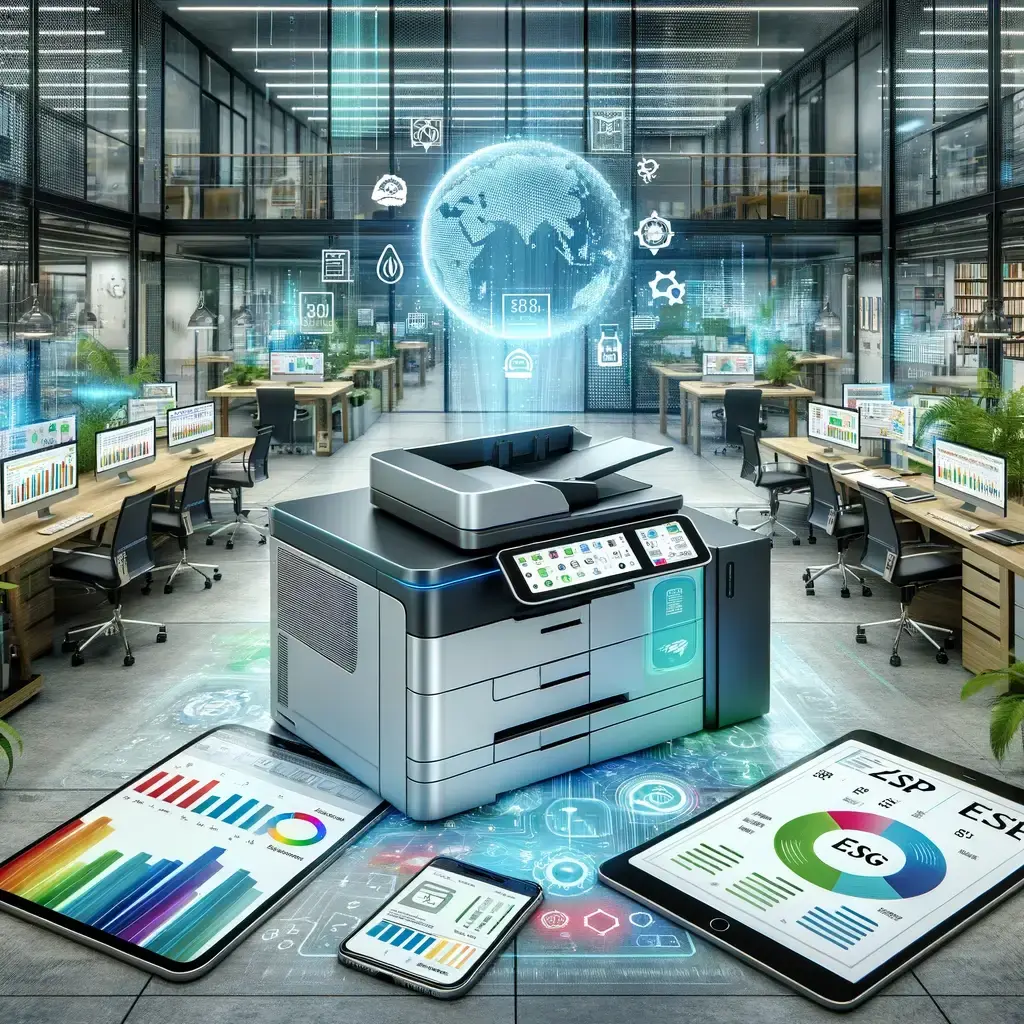
5. Optimizing Print Infrastructure: Fewer Devices, Less Consumption, Less Effort
Printing is often overlooked when it comes to energy savings. Yet many coworking spaces have more printers on hand than are actually needed. The reason is understandable: members expect uncomplicated access, operators want to avoid downtime, and guests should be able to print without IT support.
This quickly leads to unnecessary costs:
- Too many devices in standby
- High power consumption from older printer models
- Unnecessary maintenance for rarely used printers
- Paper and toner waste from misprints
- IT overhead from changing users
With ezeep, printing in coworking spaces can be organized far more efficiently. Members simply print from the cloud, without driver installation or complicated setup. Operators can centrally manage printers, control access, and make better use of existing hardware.
This not only saves energy but also reduces operational complexity.
Typical payback: Often fast, since less hardware, less support, and lower consumption work together.
6. Controlling Meeting Rooms Based on Bookings
Meeting rooms are important revenue drivers in coworking spaces, but also typical energy consumers. Lighting, displays, video conferencing equipment, heating, or cooling often run long before an appointment or remain active afterward.
A simple connection between the booking system and room control can make a big difference here.
Possible measures:
- Activate equipment only shortly before the booking starts
- Automatically reset lighting and climate control after the appointment ends
- Turn off displays and presentation equipment
- Keep unused rooms in eco mode
- Verify room occupancy with sensors
- Even without full automation, a clear "room reset" process for the community team helps.
Typical payback: Particularly attractive for spaces with many meeting rooms and frequent bookings.
7. Don't Forget Kitchen and Community Areas
Coffee, water, refrigerators, and kitchen appliances are part of the coworking experience. Still, it's worth taking a look at consumption and runtimes.
Quick measures include:
- Activate eco modes on coffee machines
- Operate boilers and water dispensers on timers
- Regularly defrost refrigerators and set at a suitable temperature
- Replace old devices with efficient models
- Deliberately switch off devices outside of opening hours
Here in particular: small changes quickly become relevant through daily use.
8. Making Sustainability Visible
Saving energy isn't just a cost topic. For many members, startups, and companies, sustainability is an important selection criterion. Operators who actively communicate energy efficiency strengthen their space's positioning.
This doesn't have to come across as preachy. Simple, transparent messages work better:
- "Our meeting rooms are heated based on demand."
- "We reduce standby consumption outside of opening hours."
- "Printing with us runs cloud-based and resource-efficient."
- "We print double-sided by default to save paper."
This turns an internal optimization into part of the brand promise.
Quick-Win Plan: 30 Days to the First Savings
For operators who want to get started quickly, a pragmatic 30-day plan is a good option.
Week 1: Make consumption visible
- Identify the biggest power consumers
- Compare opening hours and runtimes
- Record standby devices
- Check the number of printers and actual usage
Week 2: Implement quick fixes
- Install smart plugs
- Define schedules for devices
- Activate eco modes
- Check printing standards like duplex printing
Week 3: Control rooms based on demand
- Analyze meeting rooms
- Define temperature zones
- Automate lighting in secondary areas
- Brief the community team on reset processes
Week 4: Simplify infrastructure
- Consolidate the printer fleet
- Evaluate cloud printing with ezeep
- Establish monitoring
- Document and communicate savings
Conclusion: Identify Cost Drains, Benefit Quickly
The fastest wins come from better aligning devices, rooms, and services with actual usage.
Measures that have multiple effects at once are especially attractive: lower energy costs, less administrative effort, and a better experience for members. That's exactly why it's worth taking a look at print infrastructure as well. With ezeep, space operators can organize printing more simply, flexibly, and resource-efficiently, without reducing comfort for members.
Those who start today with small, measurable steps not only lower costs. They also make the space more future-proof, more sustainable, and more professional.
How to Print from Chromebooks: Cloud Printing Explained

OfficeR&D and ezeep Simplify Shared Workspace Printing